Quick Answer
The best way to coordinate care for an aging parent is to create a trusted care circle, centralize caregiver updates, assign responsibilities, maintain a shared schedule, and make sure everyone involved has real-time access to the information that matters most.
Taking just 5-10 minutes to set up the right coordination tools can save families hours each week and reduce the stress of keeping everyone on the same page.
6 Steps to Better Care Coordination
When families stay organized and communicate clearly, everyone can feel more confident and less overwhelmed. Here’s a simple framework to help your family work together and make sure your loved one gets the best possible care.
Create a Trusted Care Circle
Include family members, caregivers, friends, and other trusted supporters who are involved in your parent's care.
Designate a Primary Coordinator
Choose one person to help organize information, delegate tasks, and keep communication consistent.
Centralize Caregiver Updates
Caregivers should share updates in one central place so everyone has the information they need without constantly texting or calling.
Build a Shared Schedule
Keep all appointments, caregiver shifts, medication reminders, and family visits on a shared calendar that everyone can access.
Clarify Financial Responsibilities
Be clear on how expenses will be handled, who pays caregivers, and how costs are shared. Transparency now can prevent stress later.
Prepare for Emergencies
Make sure everyone has access to important contacts, medical information, and legal documents in case of an emergency.
Common Caregiving Questions
How do I coordinate care for an aging parent when siblings live in different states?
Distance can make caregiving more challenging. A shared care platform helps family members stay informed, coordinate responsibilities, and receive real-time updates regardless of location.
What information should be shared with everyone involved in care?
Families should have access to appointments, medications, care notes, schedules, emergency contacts, and important health updates so everyone is working from the same information.
How often should caregivers provide updates to family members?
The best approach is to share updates whenever there is a meaningful change in health, medications, appointments, routines, or overall well-being. Real-time updates help everyone stay informed without constant phone calls.
How can families reduce caregiver stress and burnout?
Creating a trusted care circle, assigning responsibilities, and centralizing. communication helps distribute responsibilities more evenly and reduces the burden on any one person.

One Place for Everything That Matters
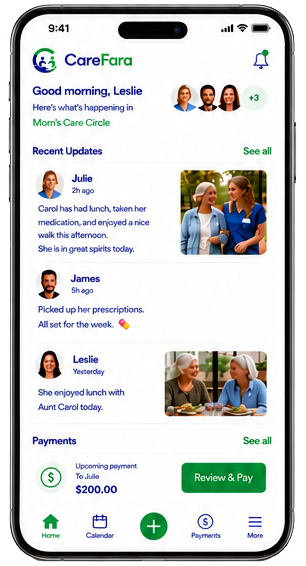
Get Early Access to CareFara
We’re inviting a select group of families and caregivers to test CareFara before launch.